Introduction
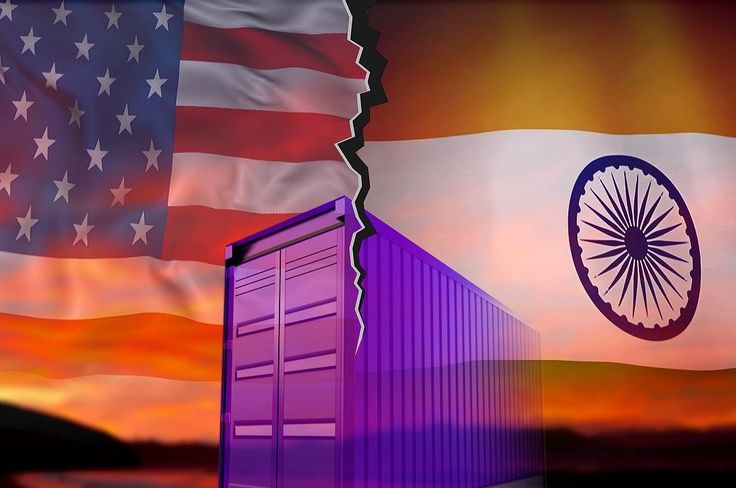
The tariff measures imposed by the United States in 2025 represent more than a temporary trade dispute; they mark a structural shift in how global trade is being conducted. For Indian MSMEs, which contribute significantly to national GDP, manufacturing output, and nearly half of India’s total exports, these measures create both economic pressure and legal complexity. What appears on the surface as a tax on goods entering the U.S. market translates in practice into shrinking margins, contractual instability, and heightened compliance risks. Understanding the legal framework and strategic response mechanisms is therefore essential for MSMEs navigating this evolving trade environment.
What Is a Tariff and How Does It Affect Exporters?
A tariff is a customs duty imposed on imported goods by government. It is generally calculated as a percentage of the value of the goods and is collected at the point of entry into the importing country. Governments use tariffs to protect domestic industries, address trade imbalances, generate revenue, or exert geopolitical leverage.
For exporters, however, tariffs act as a major trade barrier that reduces demand, lowers competitiveness, and decreases profit margins in foreign markets by raising the final price of the exported goods, thereby making the product less competitive.
U.S. Tariffs on Indian Goods
US tariffs are taxes imposed on imported goods entering the United States, aims at protecting domestic industries, addressing trade imbalances and regulate international trade flows. For exporters, these tariffs directly affect pricing, competitiveness, and access to the world’s largest consumer market.
On July 30–31, 2025, President Donald Trump announced a 25% reciprocal tariff on a wide array of Indian exports to the US market, citing unfair trade practices and significant bilateral imbalances. These tariffs came into effect on August 7, 2025. Later, on August 6, 2025, the administration issued an additional Executive Order imposing a further 25% tariff on most Indian goods, effective August 27, 2025. This measure was explicitly linked to India’s continued purchases of Russian oil, which the US claimed indirectly funded Russia’s war efforts in Ukraine. As a result, many Indian exports now face a combined effective duty of up to 50%.
As of January 2026, these combined duties remain in effect on most Indian goods, though recent signals from U.S. Treasury indicate potential relief on the additional 25% punitive layer if India’s Russian oil imports stay low (they have dropped sharply since late 2025). Ongoing bilateral talks aim for reductions, but no full rollback has occurred yet.
In addition, U.S. have proposed the “Sanctioning Russia Act of 2025”, a bipartisan measure that mandates tariffs of up to 500% on imports from countries that continue purchasing Russian oil and energy products. This provision is framed as a form of secondary sanctions, aimed at curbing indirect financial support to Russia’s war efforts in Ukraine. If invoked, such tariffs would be prohibitive in effect, far exceeding the current combined 50% duty burden faced by Indian exports.
Timeline of U.S. Tariff Measures on Indian Exports (2025–2026)
| Date | Event | Tariff Rate / Effect |
| April 2, 2025 | Initial reciprocal tariff framework announced | U.S. signals an increase in the base reciprocal tariff to 25% on select Indian goods |
| July 30–31, 2025 | Reciprocal tariff formally announced by the U.S. President | Confirmation of a 25% tariff on a wide range of Indian exports |
| August 7, 2025 | Base tariff comes into force | 25% tariff becomes fully operational on Indian goods entering the U.S. market |
| August 6, 2025 | Additional penalty tariff announced via Executive Order | Further 25% tariff announced, linked to India’s continued purchases of Russian oil |
| August 27, 2025 | Tariff escalation takes effect | Combined impact results in a total effective tariff of up to 50% on many Indian exports |
| January 5, 2026 | Sanctions-linked escalation signalled | Certain categories of goods flagged for tariffs of up to 500% under Russia-related secondary sanctions framework |
The tariffs imposed by US on India were among the highest as compared to their other trading partners thereby once again putting exporters on alert. In this background safeguarding MSMEs becomes vital to India’s national security as they contribute 30.1% to the country’s GDP, 35.4% to manufacturing output, and 45.73% % to total exports. They are widely regarded as the backbone of the Indian economy. In total India today has over 70 million MSMEs and they constitute India’s national entrepreneurship base. While numerous MSMEs believe they can absorb or pass on the impact, tariffs hardly operate in isolation. They frequently trigger stricter customs scrutiny, compliance checks, and legal risks that small exporters are least ready for.
India-Us Trade Relations
India enjoyed Generalized System of Preferences (GSP) status in trade with the US since 1975. GSP is a preferential tariff system by which custom duty preferences or concessions are granted by importing developed countries to promote exports from developing countries. The preferences are in form of lower tariffs or elimination of custom duty on imports of certain goods from the developing countries in the importing developed country. [R.1] This status helped Indian exports become cheaper and more competitive in the US markets. Under this system of GPS approximately 3,500 Indian products across sectors such as chemicals, engineering, and textiles enjoyed duty-free access to the US market. However, US under Trump’s administration revoked this special status in 2019 citing reason that India does not provide reasonable and equitable market access and has therefore failed to meet the eligibility criteria as provided.
The US and India have maintained a robust and rapidly expanding economic alliance with two-way trade reaching unprecedented milestones in the 2024–25 period. As of 2024, the exchange of goods between the two nations was valued at approximately USD 129.2 billion, reinforcing the U.S. position as India’s premier commercial partner and representing nearly 11% of India’s global trade portfolio. This thriving relationship, however, is characterized by a significant trade imbalance, as the U.S. maintained a deficit of roughly USD 45.7 billion with India.
US Tariff Structure on Indian Goods
In response to a goods trade deficit with India, the United States announced a 26% reciprocal tariff on Indian goods which it later lowered to 25% in April 2025. Along with this a 10% baseline tariff was also imposed on all imports, including India. While the implementation was temporarily delayed by a 90-day window, several other nations including Japan, South Korea, the United Kingdom, and Pakistan successfully negotiated trade concessions before the deadline. India, however, was unable to secure a similar reprieve. This diplomatic deadlock led to the imposition of a 25% reciprocal tariff on July 30, followed shortly by a second 25% “punitive” levy intended to increase U.S. leverage in ongoing negotiations.
According to data from the Global Trade Research Initiative (GTRI), these measures have left 66% of Indian export categories facing U.S. duties that now average a staggering 50%. The economic fallout, however, has been highly uneven across different sectors.
Sectors Most Affected by US Tariffs
The following industries face the greatest exposure under the newly imposed 50% tariff regime, collectively accounting for over 55% of India’s total exports to the United States, thereby placing them at high risk from the tariff escalation: Textiles and Apparel: It contributes approximately 18% of India’s exports to the U.S and the 50% tariff wall has resulted in rapid loss of market share to Vietnam, Bangladesh, and Pakistan, which currently enjoy more favourable tariff treatment.
- Gems and Jewellery: With MSMEs contributing 65% of exports and relying heavily on the US market ($10 billion in 2024), this sector faces a potential 20-30% revenue drop. Small-scale jewellers and artisans, particularly in hubs like Jaipur and Surat, may struggle with business insolvency and job losses, often lacking the capital to pivot to new markets.
- Leather and Footwear: It has been significantly impacted by the policy shift and exports worth nearly USD 2 billion to the U.S. are under threat. This sector has limited ability to absorb these increased costs which has led to falling demand, layoffs, wage cuts, and closure of small businesses. The industry employs about 4.4 million people, mostly from marginalized communities.
- Marine Products: The higher tariffs erode margins and weaken India’s position vis-à-vis Southeast Asian competitors.
- Chemicals: MSMEs hold about a 40% share in this sector, where tariffs will surge from 3.7% to 53.7%. Small chemical manufacturers may face reduced demand for specialty products.
- Automobile Components: These are integrated into global supply chains, particularly with U.S. manufacturers and tariff escalation increases costs for buyers thereby encouraging supply chain away from Indian suppliers.
Exempted Sectors under US Tariffs
There are certain sectors which are exempted from tariffs as it favours US interests. These are considered as the high-priority sectors and include:
- Pharmaceuticals
- Semiconductors
- Energy resources like crude oil and natural gas
- Critical minerals.
This helps in protecting India’s strategic exports especially the export of generic drugs since India supplies around 40%-50% of pharmaceuticals to US.
Cross-Border Legal Framework Governing Tariffs
Tariff measures do not operate in isolation but within a broader international legal framework. The cross-border legal framework governing tariffs is primarily established by World Trade Organization (WTO) principles, which sets rules on Most-Favoured-Nation treatment, customs valuation, and schedules of concessions. These international standards are enforced domestically through national customs acts such as FEMA regulations and international Incoterms (e.g., DDP, CIF) which determine which party bears the tariff, ensuring compliance with international trade law. While member countries may adjust tariffs within permitted limits or invoke certain exceptions, including national security, excessive or discriminatory tariff practices can become subject to international scrutiny and dispute resolution.
Impact of US Tariffs on Indian MSMEs
While large exporters often possess the financial depth, diversified markets, and institutional support to absorb tariff shocks, Indian MSMEs operate on thin margins. The imposition of abrupt US tariffs in 2025 has thus led to disproportionate impact on MSMEs, whose business models are characterized by limited capital reserves, high input costs, dependence on a small number of overseas buyers, and minimal pricing power. For these enterprises, even marginal increases in export-related costs can disrupt cash flows and threaten operational continuity.
The immediate impact of higher tariffs has been a sharp compression of profit margins. MSMEs are often unable to pass on additional costs to buyers and as a result many exporters are compelled to absorb the tariff burden themselves, rendering exports commercially unviable. Tariffs also lead to increase in legal and administrative risks.
At the employment level, the impact has been severe. MSMEs are among the largest generators of non-agricultural employment in India, particularly in labor-intensive sectors. As export orders decline or contracts are renegotiated at lower prices, enterprises have resorted to workforce rationalization, wage reductions, and in some cases, complete shutdowns.
Strategic Shields for MSMEs Against Tariff-Induced Risks
In light of these challenges, it becomes essential for MSMEs to adopt a practical and structured approach for managing tariff-related risks. Short-term coping mechanisms are insufficient in an environment where trade policies are increasingly shaped by geopolitical considerations. The following strategic shields offer a framework through which MSMEs can enhance resilience and safeguard their export operations.
Shield I: Tariff-Responsive Export Contracts
When tariffs (import duties) suddenly increase, someone has to bear the extra cost. If your contract does not clearly specify who will pay, usually the small exporter suffers. So, MSMEs should make sure their export agreements clearly mention what will happen if tariffs increase. This can be done by adding clauses in the contracts for changing prices, renegotiating deals etc. This stops buyers from forcing all extra costs on you. Your contract should include:
- Automatic price increase clause: If tariff increases by 10%, your selling price automatically increases proportionately.
- Renegotiation clause: If tariff crosses a certain- level (say 15%), both parties must sit and revise the contract.
- Exit clause: If tariff becomes so high that the deal is no longer profitable, you can legally suspend or terminate the contract.
Suppose a Mumbai-based textile MSME exports garments to the US. Suddenly, the US increases import duty by 20%. If the contract has a tariff clause say, “If US tariffs on garments increase by 15% or more, we add that exact amount to our price”, the price goes up automatically and you don’t have to lose money. If not, the buyer may refuse to pay more and the MSME bears the loss.
Shield II: Accurate Product Classification
Every product exported is given a code under the Harmonized System (HS). The duty or tariff rate depends on this code. If the classification is wrong, you may have to pay higher duty, face penalties, experience shipment delays or get stuck in customs audits. Many MSMEs ignore this and rely blindly on freight agents. Instead MSMEs should:
- Ensure correct HS code classification.
- Keep detailed product specifications and documents.
- Regularly check updated tariff rates.
- Consult a customs expert when in doubt.
Suppose an MSME makes leather bags. If you classify them as “handbags” (higher tariff) instead of “travel bags” (lower), you pay extra. Therefore, MSMEs should get their products classified under correct HS codes and thereby save on extra duty or penalty imposed.
Shield III: Pricing Strategy and Risk Buffering
Many MSMEs quote prices only to win orders. But in a high-tariff environment, this is risky. Instead of pricing only for competition, businesses should:
- Add a small buffer amount to cover unexpected tariff increases.
- Include price revision clauses.
- Use flexible pricing linked to duty changes.
Suppose if cost of your product is ₹100 and you normally sell at ₹110, instead of quoting ₹110, you may quote ₹113–115 with a clause that price will adjust if tariffs change.
This might appear slightly expensive, but helps to avoid sudden losses and protect long-term sustainability by enhancing financial stability.
Shield IV: Market and Buyer Diversification
If 80% of your exports go to one country and that country increases tariffs, your entire business is affected. Thus, relying on one country or buyer is risky and therefore MSMEs should diversify their market as it reduces risk. Instead of exporting only to the US, MSMEs should explore new markets like China, Latin America, Africa or Russia.
The Indian government is also helping MSMEs through trade fairs, export promotion councils, and market entry support.
Recent data validates this approach as India’s exports to China increased by nearly 37% (Apr–Dec 2025) overtaking the US as top partner in some periods. Agro-based and textile MSMEs are seeing strong growth in these alternative markets, supported by trade fairs and export councils.
Thus, this approach helps MSMEs as if one market becomes difficult, you still have other markets generating revenue.
Role of Government Support and Policy Interventions
Methods for Retaining MSME Profits in a High-Tariff Environment
Profit retention in a tariff-heavy environment requires cost optimisation through supply chain efficiency, automation, and better procurement strategies to offset part of the external duty burden. This can be done by reducing dependence on a single-country supplier that are heavily targeted by tariffs and shifting your suppliers in countries with lower tariffs or those where free trade agreements (FTAs) exist or by replacing imported raw materials and components with domestic alternatives to avoid import duties entirely. Also negotiating shared tariff responsibilities with buyers and adopting indexed pricing mechanisms may preserve margins in volatile regulatory conditions.
MSMEs can also export differentiated or branded products which may reduce reliance on pure price competition and strengthen pricing power. Financial prudence, including currency hedging and maintaining contingency reserves sufficient to cover several months of operational expenses, further reinforces stability.
Government support initiatives introduced under the Export Promotion Mission provide liquidity and credit facilitation to MSME exporters. Interest subvention schemes and extended export credit tenures offer temporary relief, but long-term sustainability ultimately depends on strategic adaptation at the enterprise level.
Conclusion
The 2025 US tariff regime represents a structural shift in the global trade landscape, with far-reaching implications for Indian MSMEs. Tariffs are no longer isolated fiscal instruments but powerful tools of economic and geopolitical leverage. For MSMEs, survival in this environment depends on preparedness, adaptability, and strategic foresight.
By strengthening contracts, ensuring compliance readiness, adopting resilient pricing strategies, and diversifying markets, MSMEs can transform vulnerability into resilience. In an era of unpredictable trade policy, such strategic shields are not optional safeguards but essential components of sustainable export growth.
The views expressed are for informational purposes only and should not be construed as legal advice. For specific guidance on cross-border digital evidence matters, consult qualified legal counsel.